
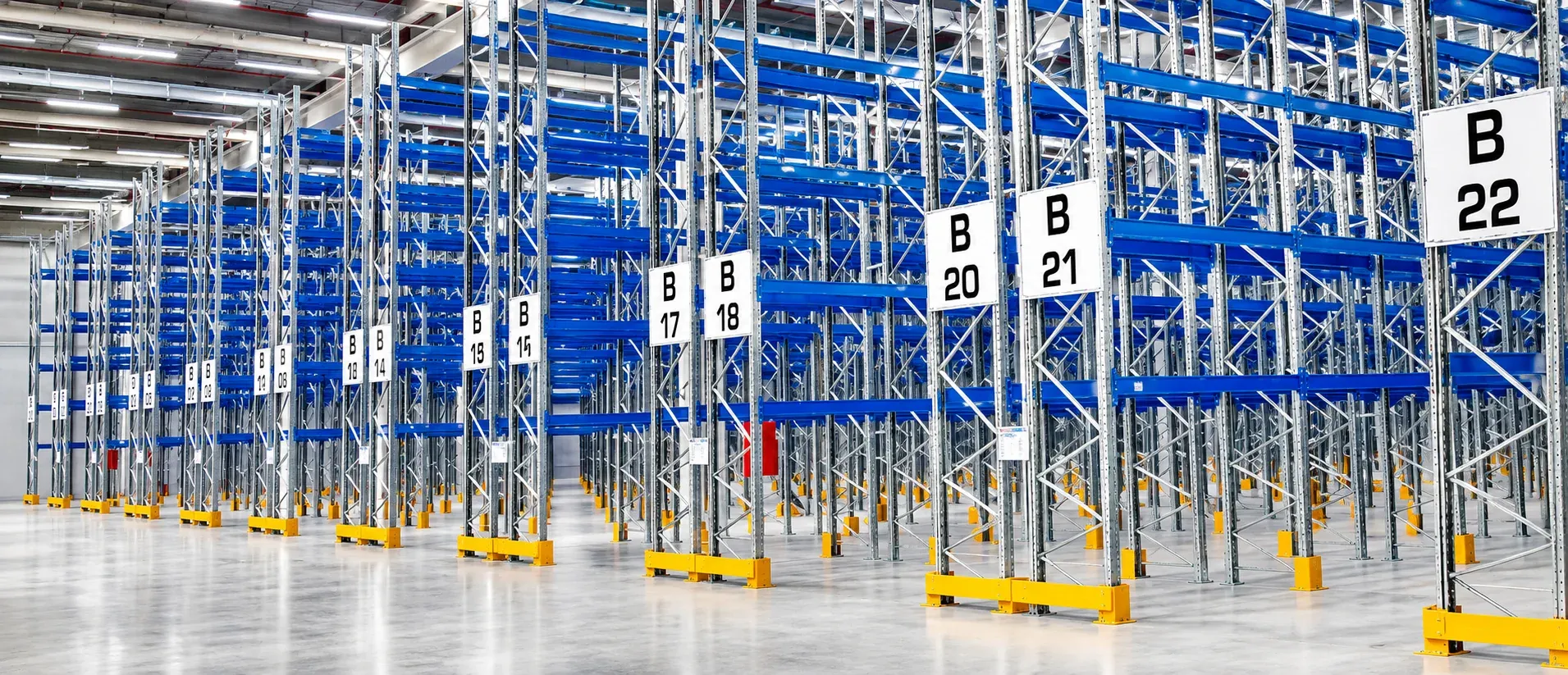
Pallet racks help warehouses organise goods vertically while keeping individual pallet positions identifiable. Their practical value depends on how the storage bays and aisles fit with your stock profile. A good project brief makes it easier to compare racking options and avoid costly layout changes.
Start with your pallet and stock profile
Record the pallet type, maximum loaded size and weight, and whether the load overhangs the pallet. Note the range of weights, not only an average. Identify products that turn over frequently, goods that require special storage conditions and any items that cannot be stacked.
Where stock needs frequent direct access, a selective arrangement may be a useful starting point. Other layouts may increase density but alter retrieval flexibility. The right answer depends on actual inventory operations.
Measure the building and handling paths
- Overall clear length, width and usable height
- Column spacing, door locations and building services
- Floor condition and intended rack anchoring areas
- Forklift type, turning needs and operating clearances
- Receiving, dispatch and picking routes
- Emergency exits and applicable safety clearances
These measurements should be taken on site. A drawing or simple sketch can help start the discussion, but it is not a substitute for verified dimensions.
Think beyond the number of pallet positions
Consider how operators will locate, replenish and retrieve stock. Labelled rack positions, consistent load placement and clear aisles support accurate inventory handling. Operational changes such as a new forklift or pallet format can affect the usefulness of an existing layout.
What to request from a racking supplier
Ask for a layout proposal matched to actual site conditions, identified design assumptions and the information needed for safe installation. Confirm that loading, floor suitability and anchoring will be assessed. Keep documentation of intended use and maintenance requirements after commissioning.
After installation
Operators should understand load placement rules and report visible damage promptly. Rack modifications, relocation or significant inventory changes should be reviewed rather than treated as routine adjustments. Periodic inspection and sensible daily operation protect the investment.
Frequently asked questions
What should I share for a pallet-rack quotation?
Share warehouse dimensions, loaded pallet dimensions and weights, stock turnover, handling equipment and site photographs or a floor plan.
Can pallet racks be installed without checking the floor?
Floor and anchoring conditions are important design inputs and should be assessed before installation.